Moving to Peachtree City is a decision most residents say they don't regret — but it comes with a learning curve. The city operates differently from most suburbs, and understanding how it works before you arrive will save you time, money, and frustration.
As a local REALTOR® who has helped hundreds of families relocate here, I've seen what surprises people most. This guide covers the practical realities of moving to Peachtree City — not just the highlights, but the things you actually need to know.
What Makes Peachtree City Different
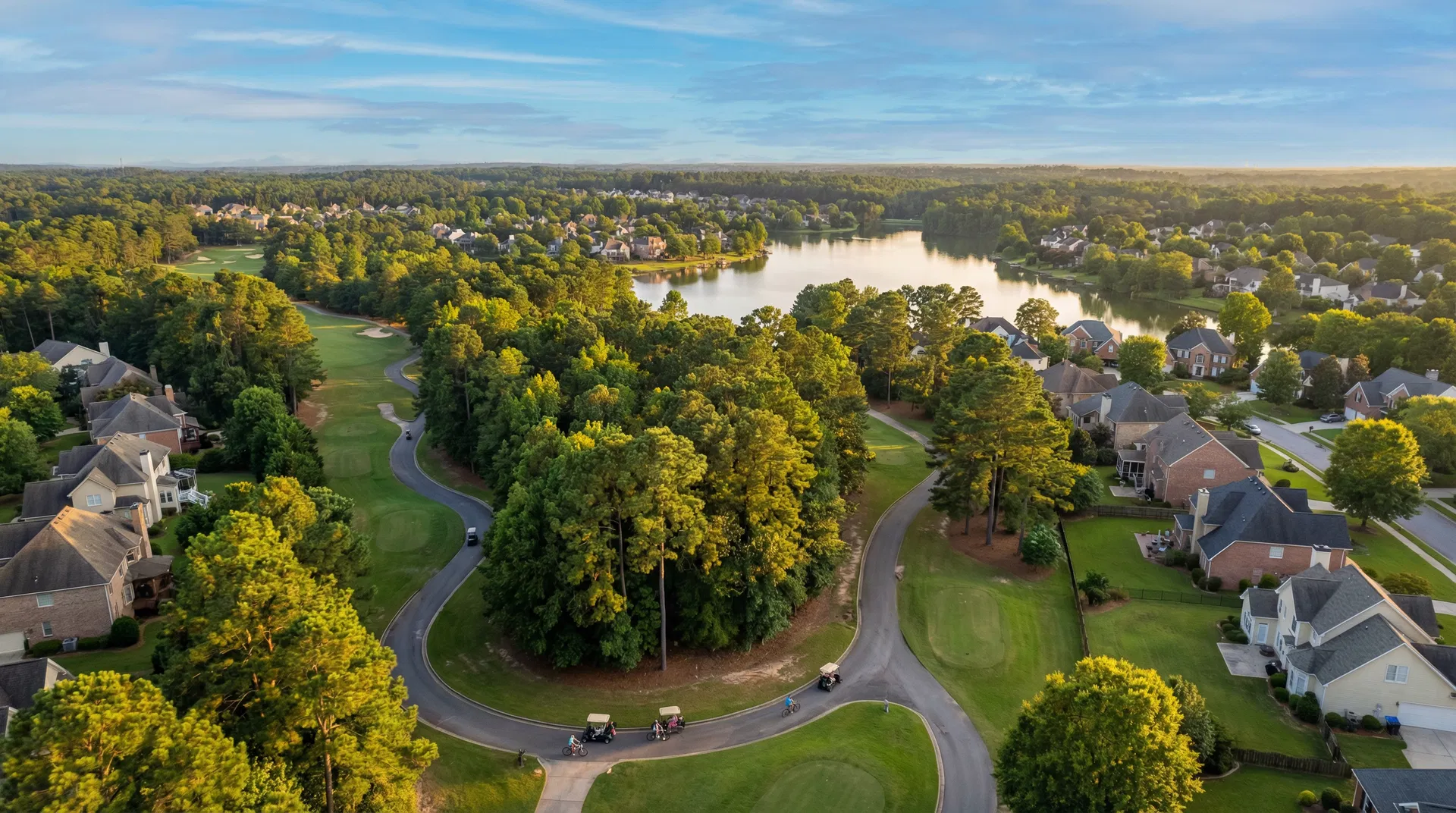
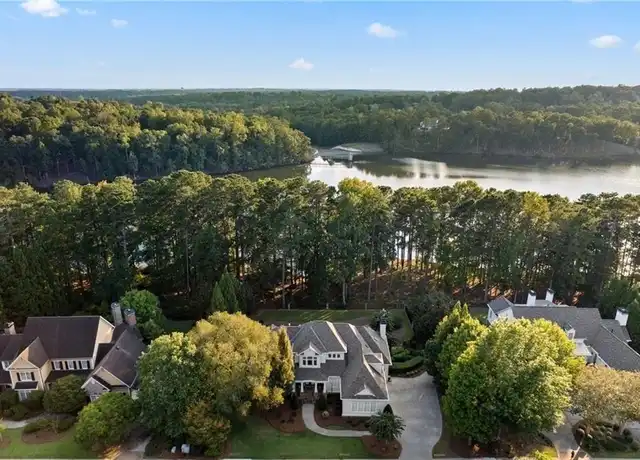
Peachtree City is a master-planned community built around four villages, three lakes, and over 100 miles of golf cart paths. It was designed from the ground up for a specific kind of lifestyle — one where families can move around their community without always getting in a car.
That design philosophy shapes everything: where you shop, how your kids get to school, how you socialize with neighbors, and even how you think about your home's location. Understanding this before you choose a neighborhood is critical.
The Golf Cart: More Than a Novelty
The golf cart path system is the defining feature of Peachtree City. Over 100 miles of paved multi-use paths connect every neighborhood to schools, shopping centers, restaurants, parks, and recreation areas. Most families own at least one golf cart and use it regularly for local trips.
Before you buy a home, ask your agent specifically about path access. A home on a path-connected street is meaningfully more desirable — and more valuable — than one that requires driving to reach the path system. This is one of the most important micro-location factors in the entire market.
Golf carts must be registered with the city ($36 for 3 years). Drivers must be at least 15 with a learner's permit. Carts need headlights and taillights for nighttime use. Budget $5,000–$12,000 for a used cart, or $12,000–$20,000 for a new one.
Choosing the Right Village
Peachtree City's four villages — Aberdeen, Braelinn, Glenloch, and Kedron — each have a distinct character. Your village determines your school zone, your proximity to amenities, and the feel of your daily life.
Aberdeen: Established, wooded, private. Best for buyers who want larger lots and a quieter feel. Served by McIntosh High School.
Braelinn: Most convenient, cart-accessible to The Avenue and major shopping. Served by Starr's Mill High School.
Glenloch: Family-friendly, near Lake Peachtree and Drake Field. Served by McIntosh High School.
Kedron: Newest, most upscale, highest-rated schools. Served by Starr's Mill High School.
For a full breakdown, see our best neighborhoods in Peachtree City guide.
Schools: What New Residents Need to Know
Fayette County School System is one of the top-ranked districts in Georgia. Both high schools — McIntosh and Starr's Mill — are excellent. But your specific street address determines your school zone, and this matters for both your children's experience and your home's resale value.
Starr's Mill High School has driven slightly stronger buyer demand in recent years, particularly in Braelinn and Kedron villages. Before making an offer, confirm the exact school zone with your agent — it's not always obvious from the village alone.
The Commute Reality
Peachtree City is approximately 30 miles south of downtown Atlanta. The commute is manageable but not trivial. Here's what to expect:
To downtown Atlanta: 45–70 minutes during peak hours via I-85
To Hartsfield-Jackson Airport: 20–25 minutes — one of the best commutes in the metro area
To Trilith Studios (Fayetteville): 15–20 minutes
To Newnan: 20–25 minutes
Many residents work from home part-time or commute to the airport area, which makes the location work well. If you're commuting to Midtown or Buckhead daily, budget for the time and fuel costs.
What Surprises New Residents Most
After helping hundreds of families move here, here's what most people say they didn't expect:
How much they use the golf cart: Most new residents underestimate how central the cart becomes to daily life. Within a few months, most families are using it multiple times per week.
How tight-knit the community is: Peachtree City has a strong community culture. Neighbors know each other. Kids play outside. Events at The Fred bring people together. It feels different from most suburbs.
How much school zone matters: New residents often don't realize how much their specific street address affects school assignment — and resale value. This is worth researching carefully before buying.
How limited the rental market is: Peachtree City is predominantly owner-occupied. If you're renting while you search for a home, options are limited and prices are high.
Pros and Cons of Moving to Peachtree City
| Pros | Cons |
|---|---|
| Top-ranked schools in Georgia | Higher home prices than many suburbs |
| 100+ miles of golf cart paths | Car-dependent for Atlanta commutes |
| Very low crime rate | Limited nightlife and urban amenities |
| 20 min from Hartsfield-Jackson | Limited rental inventory |
| Strong community culture | Limited local job market |
| Three lakes and extensive green space | I-85 congestion during peak hours |
Ready to Make the Move?
Work with a local expert who knows every village, school zone, and neighborhood in Peachtree City.
Talk to Israel → Search Homes for SaleIf you're relocating from out of state, our Peachtree City community guide gives you a broader overview of the city. And if you're a military family PCS'ing to the area, see our military relocation guide for VA loan guidance and neighborhood recommendations near Fort Moore.
Already own a home and thinking about selling before you move? Selling your home in Peachtree City starts with understanding your home's value in today's market — and the right strategy to maximize your outcome.